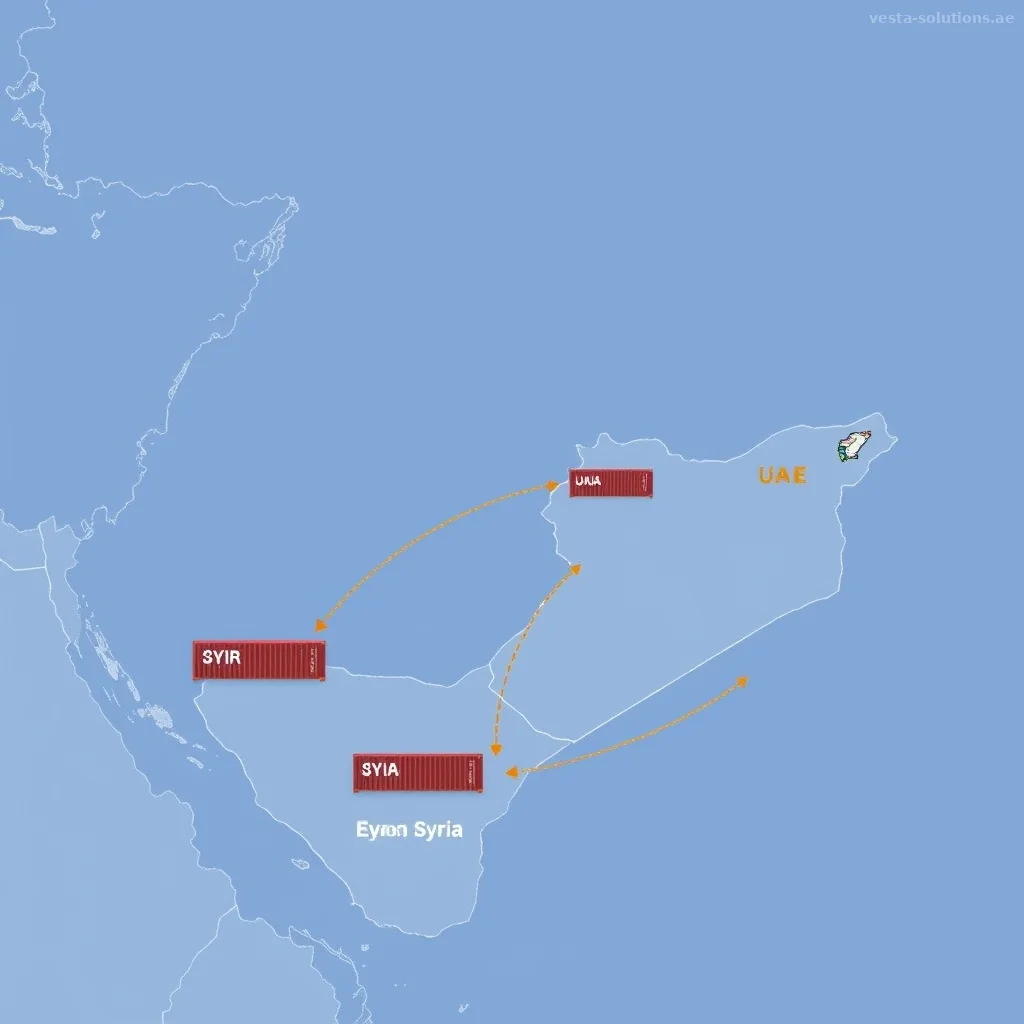
Bilateral trade between the UAE and Syria has doubled from USD 445 million in 2021 to an estimated USD 890 million in 2025. This growth creates significant opportunities for new businesses entering the corridor. Understanding trade flows, key products, and logistics is essential for capitalizing on this expansion.
60% Growth
UAE-Syria trade grew 60% between 2022-2025, outpacing regional averages significantly.
Shipping Route
Jebel Ali to Tartous: 4 days transit. Weekly sailings by multiple carriers including MSC and Maersk.
Re-Export Hub
UAE serves as re-export hub for Syrian goods entering Gulf and African markets.
Trade Growth Data
| Year | Total Trade | UAE Exports | Syria Exports |
|---|---|---|---|
| 2021 | USD 445M | USD 290M | USD 155M |
| 2022 | USD 510M | USD 330M | USD 180M |
| 2023 | USD 620M | USD 400M | USD 220M |
| 2024 | USD 750M | USD 480M | USD 270M |
| 2025 | USD 890M | USD 560M | USD 330M |
Key Products
UAE to Syria: construction materials (28%), machinery (22%), electronics (15%), food (12%), chemicals (10%). Syria to UAE: textiles (30%), agricultural products (25%), phosphates (15%), olive oil (12%), handicrafts (8%).
Logistics & Shipping
Sea Freight
Jebel Ali to Tartous. 4 days. 20ft container: USD 1,800-2,500. Weekly sailings by MSC, CMA CGM, Maersk.
Land Route
Dubai to Damascus via Saudi/Jordan. 3 days. For time-sensitive and smaller shipments.
Air Freight
Dubai to Damascus. 1 day transit. USD 2-4/kg. For high-value, low-volume goods.
ℹ️ Note: Customs clearance in Tartous averages 3-5 days for properly documented shipments. Join a freight forwarding association to expedite clearance.
New Business Opportunities
Opportunities include: importing Syrian olive oil and textiles for UAE re-export, exporting UAE construction materials to Syrian projects, setting up a trading company in both markets, and providing logistics and customs brokerage for UAE-Syria trade.
⚠️ Important: Syria is subject to US and EU sanctions. Ensure trade activities comply with UAE regulations and do not involve sanctioned individuals or entities.
Frequently Asked Questions
What payment methods are used?
Letters of credit through Syrian banks, cash against documents, wire transfers in USD or EUR. Some use AED via UAE exchange houses.
Are there trade agreements?
No formal FTA. Goods subject to Syrian import tariffs of 5-30%. UAE applies standard 5% import duty.
Main challenges?
Banking restrictions, currency volatility, sanctions compliance, and customs delays. Use experienced freight forwarders.
✅ Tip: Register your trade routes with UAE Ministry of Economy’s trade facilitation program for priority clearance and reduced inspections.
Resources
Ready to Get Started?
Contact Vesta Solutions today for expert guidance on your UAE-Syria business setup. Our team replies within one working day.
Contact Us or call +971 50 435 0665 — email: info@vesta-solutions.ae
Click the Contact button in the bottom-left corner to start your journey.

Rana Kassab (رنا قصاب)
Technical Writer. Creates detailed guides on Syrian business procedures, legal documentation, and regulatory compliance.